
Why Dewatering Is the Difference Between Retaining Walls That Last — and Ones That Move
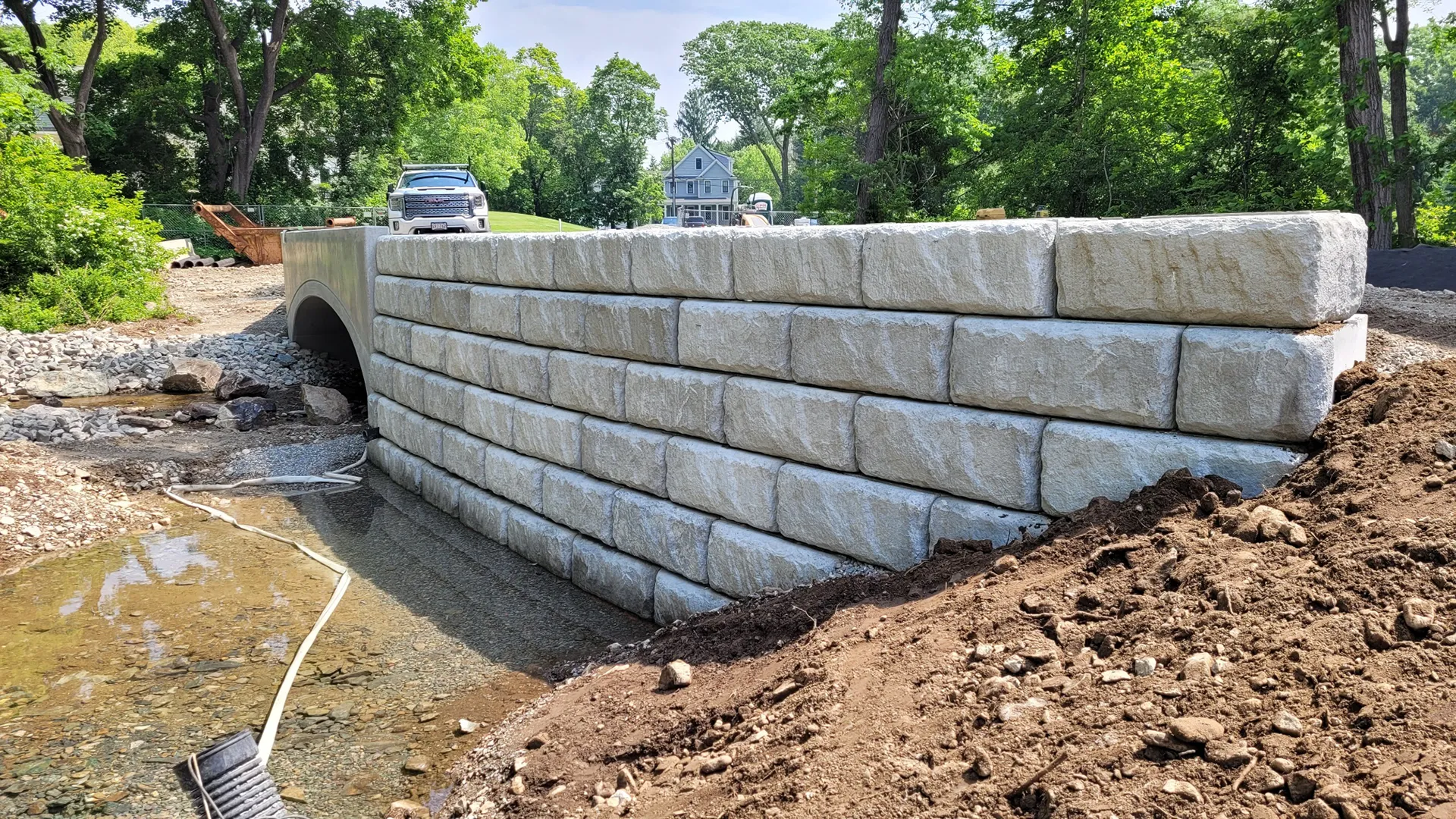
In New England, retaining wall problems rarely start with the wall itself. They start with the soils and ground underneath.
Seasonal groundwater, glacial soils, coastal conditions, and freeze-thaw cycles combine in ways that generic retaining wall designs often underestimate. In our region, overlooking dewatering isn’t just a technical miss — it’s one of the most common reasons otherwise well-engineered walls begin to shift within a few winters.
Before block selection, wall height, or finishes are ever discussed, controlling groundwater is often the single most important step in building a retaining wall that performs long-term in Massachusetts, Rhode Island, and Southern New Hampshire.
What We See Go Wrong When Dewatering Is Overlooked
Water is relentless. Beneath the surface, groundwater creates hydrostatic pressure that pushes laterally against retaining walls and saturates supporting soils. When that pressure isn’t managed correctly, the issues don’t always appear immediately — but they do appear.
Across New England projects, we can sometimes see:
- Walls rotating or leaning after the first or second winter
- Cracking or separation caused by uneven settlement
- Erosion of backfill behind the wall face
- Frost heave pushing walls out of alignment as trapped water freezes and expands
In many cases, the wall system itself is sound. The failure occurs because the base soils were saturated, unstable, or improperly drained when construction began.
Why New England Conditions Demand a Different Approach
Retaining walls in this region face challenges that don’t exist in many other parts of the country:
- Freeze-thaw cycles: Groundwater expands when frozen, exerting upward and lateral pressure on foundations and backfill.
- Glacial soils: A variable mix of sand, clay, and till can trap water unpredictably, making drainage inconsistent across short distances.
- High water tables: Common on the South Shore, Cape Cod, and low-lying inland sites.
- Coastal influence: Storm surge, tidal fluctuation, and saturated subsoils increase long-term moisture exposure.
These conditions mean dewatering isn’t an optional precaution — it’s often a prerequisite for structural stability.
How J&R Precast Evaluates Dewatering Before a Retaining Wall Is Built
Every retaining wall project begins with understanding how water behaves on that specific site. Dewatering decisions are not one-size-fits-all, and not every project requires active groundwater removal.
Based on site conditions, soil reports, and seasonal factors, our engineering team evaluates:
- Groundwater presence and seasonal fluctuation
- Soil composition and drainage behavior
- Excavation depth and slope stability
- Proximity to coastal or environmentally regulated areas
Depending on what we find, solutions may include:
- Temporary wellpoint or sump systems to stabilize soils prior to excavation
- Drainable base materials with filter fabric to prevent long-term saturation
- Perforated drainage systems and reinforced backfill for taller walls
- Backfill mixes selected specifically for coastal or high-water-table sites
We coordinate closely with site engineers, contractors, and local building inspectors to ensure the retaining wall design aligns with all Massachusetts and Rhode Island building requirements — before construction begins.
Across multiple retaining wall installations throughout Massachusetts and Rhode Island, the same pattern can appear when groundwater is not addressed early: An otherwise sound retaining wall systems can begin to shift once seasonal moisture and freeze-thaw cycles take hold if the proper site preparation has not been taken into account. What’s in the ground matters.
Where Engineered Wall Systems Fit Into the Equation
Systems like Redi-Rock are engineered to accommodate groundwater and relieve pressure when properly installed. Their interlocking design and integrated drainage features are well-suited for challenging conditions when paired with appropriate site preparation. These walls actually flex when they need to so they don’t break.
No retaining wall system can compensate for unstable, saturated soils beneath it. Long-term performance depends on pairing engineered components with proper dewatering and drainage strategies suited to local conditions.
For a technical overview of how Redi-Rock systems address hydrostatic pressure, the manufacturer provides additional detail here:
Why Dewatering Helps Build Strong Retaining Walls with Redi-Rock
Local Example: Stabilizing a New Driveway in Hanover, MA
On a recent Hanover project, a new driveway was being constructed in an area prone to runoff and groundwater seepage. Left unmanaged, the saturated subgrade would have increased the risk of frost heave and long-term settlement.
Before excavation, the contractor implemented temporary sump dewatering to stabilize the base soils. A deep drainage layer was incorporated behind the retaining wall to manage long-term water movement.
By addressing groundwater first, the retaining wall was built on a dry, stable foundation — reducing seasonal movement and protecting the driveway investment over time.
This approach mirrors what we see across many installations throughout Massachusetts and Rhode Island: when water is controlled early, walls perform as designed.
Building Retaining Walls That Hold Up to New England Conditions
Across dozens of retaining wall installations in the region, one pattern is consistent: controlling groundwater early is the most effective way to prevent long-term movement, cracking, and frost-related damage.
J&R Precast combines regional experience with engineered retaining wall systems to help property owners, engineers, and contractors build with confidence — even in the most challenging soil and water conditions.
If you’re planning a retaining wall project in Massachusetts, Rhode Island, or Southern New Hampshire, we’re happy to review site conditions and discuss how dewatering factors into a durable solution.
FAQs: Dewatering & Retaining Walls in New England
Do all retaining walls require active dewatering?
No. Not every site requires active groundwater removal. However, sites with slopes, poor drainage, coastal exposure, or high seasonal water tables benefit from evaluating dewatering before construction.
How does freeze-thaw affect retaining walls?
When water trapped in soils freezes, it expands and exerts pressure on both soil and concrete. Proper drainage and dewatering reduce frost heave and help maintain wall alignment over time.
Will dewatering slow down my project?
In most cases, dewatering runs alongside excavation and site prep. Addressing groundwater early often prevents costly delays or repairs later.
What dewatering methods are common in New England?
Temporary wellpoints and sump systems are most common. In coastal or high-water-table areas, deeper drainage layers or staged excavation may be used to manage inflow effectively.
Retaining wall performance in New England is highly dependent on site-specific conditions, particularly groundwater behavior and soil composition. If you’re in the early planning stages in Massachusetts, Rhode Island, or Southern New Hampshire, and want to talk through your site conditions before design or installation begins, you can connect with the J&R Precast team to discuss what factors may need to be addressed.